
Measuring Your Kallax Unit for a Perfect Fit
Understanding Shelf Dimensions
The space between a Kallax shelf’s interior walls and the exterior frame looks uniform, yet every opening hides its own exact volume. Measuring your unit before purchasing storage boxes that fit Kallax prevents the frustration of a box that rattles or jams.
Standard Kallax units share outer dimensions, but internal apertures shift with the cube count. A 4×2 frame has central supports that a 2×2 does not. Grab a metal tape measure and record the height, width, and depth of the opening itself.
Measure these elements:
- Opening height front and rear
- Opening width top and bottom
- Depth front face to rear panel
- Hardware clearance
Storage boxes that fit Kallax typically respect the 33 cm cube, but third party brands trim to 32.5 cm. That half centimetre changes how the box sits against the frame. From my own measurements, a tight fit looks deliberate; a loose one collects dust.
Considering Depth and Height
Thirty-nine centimetres is the exterior depth of a standard Kallax frame, yet the interior opening runs closer to thirty-three. Storage boxes that fit Kallax rarely fill that full interior span. The rear void becomes a pocket where dust settles and stray cables hide. Height matters in its own right. A box that rises above the frame’s front lip breaks the flat plane. A box that sinks below it creates a shadowed recess. Neither is wrong, but each changes how the unit reads in the room. When you evaluate storage boxes that fit Kallax, verify these points:
- The interior depth from front face to rear panel
- The box’s height against the opening’s vertical span
- The clearance behind the box once fully inserted
Depth and height govern the final impression. Aligned boxes make the unit feel built-in. Mismatched ones betray themselves at a glance.
Account for Brackets and Supports
Measure the metal, not the wood. Brackets and support bars inside a Kallax claim part of every opening. A tape measure on the outer frame lies. Storage boxes that fit kallax must clear those plastic tabs and rails.
Start with the side brackets. They sit flush but their inner surfaces push inward. Use a rigid ruler to read the gap between bracket faces. For vertical space, locate the support bar. It sits about five millimetres above the bottom panel.
A proper check follows this order:
- Clear the bay.
- Measure between bracket faces at front and rear.
- Measure from the support bar to the shelf underside.
- Record each bay separately.
Without accounting for brackets and supports, you are guessing. The manual’s numbers do not match the real cavity. Storage boxes that fit kallax only work when you measure what is actually there.
Exploring Storage Box Styles for Kallax
Fabric Bins and Baskets
Somewhere between the satisfying click of a perfectly aligned record and the quiet rustle of a paperback being pulled free lies the true character of your living space. The storage boxes that fit kallax are not mere organisers, they are the wardrobe for your everyday narrative. Moving beyond hard plastic and utilitarian solid options, the realm of fabric opens up a world of texture and softness that can completely transform the aesthetic of a room.
Fabric bins bring a warmth that cold, rigid materials simply cannot replicate. They invite touch and soften the stark lines of the unit, making a large wall of shelving feel more like a curated library than a warehouse. When you choose a woven basket, you introduce a tactile element that adds depth and visual interest. These choices shift the perception of the entire piece from a simple storage solution to a featured piece of decor.
To truly elevate the look, consider the specific weave and texture of your chosen baskets.
– Linen and cotton blends offer a refined, tailored appearance that suits minimalist and Scandinavian design schemes perfectly.
– Seagrass and water hyacinth provide a robust, organic feel that introduces an earthy, grounded quality to a modern home.
– Felt options give a luxurious, thick silhouette and are remarkably effective at muffling sound within the shelves.
The choice between a structured bin and a slouchy basket often depends on the items you are storing. A structured, reinforced fabric box will stand up straight, making it ideal for vinyl records or heavy books that need vertical support. Conversely, a softer canvas tote style can expand to accommodate blankets and throws, cramming in extra warmth without damaging the items inside. This flexibility is the quiet strength of fabric storage, allowing the container to serve the contents rather than the other way around.
In the end, selecting fabric and woven designs is more than a practical decision; it is an act of personal expression. A room filled with these tactile elements feels lived-in, nuanced, and unique to you. Beyond simply keeping a space tidy, they invite you to touch, explore, and remember, making the functional act of tidying up a far more pleasant ritual. As you look at your shelves, you see pieces of your life, softened and displayed with a certain grace.
Plastic and Acrylic Options
Storage boxes that fit kallax in clear plastic or acrylic work on a different principle: visibility. Nothing is hidden, so the contents become part of the decor. You can locate a specific controller or a favourite novel without opening a single lid.
Acrylic holds a particular advantage. It almost disappears against the shelf lines, leaving only the contents in view. The unit feels lighter and more open than its fabric-clad neighbours.
Choices vary:
- Clear acrylic suits a curated, gallery-like arrangement
- Frosted plastic softens the view while showing shapes and colours
- Opaque coloured plastic adds a bold accent to a neutral unit
These materials repel dust and resist coastal humidity, a real concern in South African homes near the ocean. In a coastal lounge, clear boxes keep board games and beach gear visible and protected.
Wooden and Bamboo Crates
Wooden crates signal permanence. They add weight to a shelf, transforming light storage into a solid fixture. I favour bamboo for its clean grain and natural resistance to warping. These storage boxes that fit kallax do not sag like fabric bins. They also avoid the cold, reflective surface of acrylic.
Bamboo is particularly forgiving in South African climates. It tolerates the dry Highveld winters and coastal humidity without cracking or swelling. Solid woods like pine require more care, but they offer a rustic character that bamboo cannot replicate.
Common structural options include:
- Open crates for displaying vinyl records or folded throws.
- Sliding lids that hide cables and small gadgets.
- Drop handles that allow the crate to pull forward like a drawer.
Always measure the cubby interior first! Wooden tolerances are unforgiving. The correct storage boxes that fit kallax become permanent fixtures, not disposable bins.
Open vs. Lidded Designs
Open boxes and lidded boxes are not interchangeable. Open storage boxes that fit Kallax put the contents on display, which works for records or a stack of folded throws. But openness also means dust. In Johannesburg, a dry wind carries fine grit that settles on every surface. A lidded design hides that reality. It gives you a clean sightline and protects items you rarely touch.
I keep open crates in living spaces where the contents are part of the decor. I keep lidded boxes in utility rooms and bedrooms, where clutter should stay out of view. The right choice depends on three factors:
- Your access frequency determines whether an open face is convenient or just exposed.
- Your location determines how much dust and moisture you tolerate.
- Your moving habits determine whether a detachable lid is worth the extra weight.
Modular and Stackable Boxes
Half the joy of a Kallax is its grid, a rhythm of cubes that asks for repetition. Modular boxes lean into this, their square footprints designed to sit flush beside one another, creating a wall of uniform texture. Stackable options take the idea further, allowing a column of storage boxes that fit Kallax to rise above the frame itself, which is useful in a cramped Johannesburg flat where floor space is scarce.
When choosing modular pieces, pay attention to the seams. Cheaper boxes twist at the corners, so the grid never quite aligns. A good stackable system uses a lip or groove to lock the next layer in place, so the entire tower acts as one solid block.
For stacking, consider:
- Weight limits, since a full crate of hardcovers will crush a hollow base.
- Access, because the bottom box pays for the top.
Choosing Materials for Durability and Aesthetics
Woven Seagrass and Rattan
Seagrass and rattan transform practical storage into tactile art. These botanical fibres breathe, which regulates humidity inside storage boxes that fit kallax, protecting heirlooms from coastal dampness. Rattan’s dense core resists cracking, while seagrass’s woven surface adds organic warmth without overwhelming a room.
- Seagrass dries quickly after spills
- Rattan bends into durable corner joints
- Both materials age gracefully, developing a honeyed patina
I prefer seagrass for its subtle fragrance, a quiet reminder of the Eastern Cape coastline. Rattan suits heavier loads, its flexibility absorbing impact. Neither material rusts nor corrodes, making them superior to metal alternatives. The choice between them depends on your room’s light and foot traffic.
Cardboard and Heavy-Duty Corrugated
Corrugated board is rarely celebrated, yet heavy duty versions handle real abuse. For storage boxes that fit kallax, double wall fluting outperforms flimsy single ply. It holds books, tools, and winter blankets without buckling, while staying light enough for easy repositioning. Unlike wooden crates, these boxes do not splinter at the edges or add bulk to an already crowded shelf.
The aesthetic side improves every season. Modern printers apply matte finish and subtle wood grain patterns that blend with lounge furniture. A wax coating protects against Cape Town damp, preventing the powdery breakdown common in cheaper boxboard. Flat sides also let you write storage contents directly, a small luxury compared to guessing what sits inside woven bins. The material absorbs impact, so a dropped corner does not mean a destroyed box. That resilience, paired with a clean profile, makes corrugated a quiet contender for Kallax units in active households. Heavy duty card remains affordable enough to replace without regret, which is more than can be said for rattan or seagrass alternatives.
Polyester and Linen Fabrics
Nearly a third of South African homes use cube storage systems, yet most never consider the fabric that guards their belongings. Linen and polyester fabrics answer the rigidity of corrugated with a softer, tactile presence. For storage boxes that fit kallax, the choice between these materials changes how a room feels and how long the box survives daily use.
Linen offers a natural, breathable weave that whispers texture into a lounge. Its fibres resist pilling and hold colour well, even after months of Cape Town sunlight. Polyester, meanwhile, shrugs off moisture and stains that would mark natural cloth. A heathered linen blend, which mixes both fibres, gives you the best of these worlds.
– Polyester resists mildew in humid coastal air
– Linen offers a refined, matte finish that complements wood tones
– Blended fabrics balance softness with structural integrity
Weaving density matters more than thread count alone. A tight, plain weave prevents small items from poking through, while a loose basket weave invites dust. The side panels of these fabric bins often sag under heavy loads, so look for a reinforced bottom board sewn into the liner. That quiet structural detail transforms a mere pouch into a proper container. Fabric edges should be double stitched, with piped seams that handle the friction of sliding in and out of a cube frame. This attention to construction turns a simple textile into a dependable piece of furniture. Choosing the right fabric becomes an exercise in sensory editing, matching the house’s personality with the endurance of the weave. The result is storage that feels like part of the room’s architecture, not an afterthought.
Quality of Handles and Reinforcements
A handle can reveal the quality of a storage box instantly. I have watched shoppers pick up bins and set them down because the grip felt flimsy. Strong handles on storage boxes that fit kallax use a rigid inner loop, stitched through the panel, not merely glued. You should feel no flex when pulling.
Hidden reinforcements matter more. A cardboard inner frame stops walls from caving, and a plywood base prevents sagging under heavy items. Many manufacturers omit them to save cost.
- Check that the handle attaches to a backing plate
- Press the side walls, they should feel firm
- Inspect corners for extra stitching or metal clips
These details shape the aesthetics too. Clean seams and hidden supports keep the container neat over time. Storage boxes that fit kallax with solid reinforcements maintain their silhouette, so the room looks deliberate even when shelves are half filled.
Organizing Your Kallax with Storage Boxes
Category-Based Organization
There is a particular quiet satisfaction in assigning a home to every object, a sentiment that resonates deeply in the bustling rhythm of South African living. We move past simple storage and into a curation of our daily lives, using the humble shelf as a canvas. The key to this transformation lies in choosing storage boxes that fit kallax and then committing to a higher level of discipline: category-based organization.
This method is less about where items physically land and more about establishing a rhythm of retrieval. It is the difference between a tidy space and an efficient one. The goal is to ensure your prized vinyl collection does not share a cubicle with tangled cables or childhood memorabilia. By dedicating specific containers to distinct functions, you eliminate the daily friction of searching for essentials.
Consider the practical application in a home office. Rather than a chaotic mix, you can create a system where every paper and peripheral has a clear destination.
1. Group active project files in one box for immediate access.
2. Store reference materials and completed documents in another, for archival purposes.
3. Reserve a third container exclusively for cables and chargers to prevent a rat’s nest of wires.
This approach adds a sense of ceremony to the act of tidying. When each bin serves a singular purpose, the visual noise of your environment drops significantly. The final result is a system where the architecture of your shelving disappears, leaving only the calm functionality of your curated collections. Order is not a destination but a manner of living. We make room for life’s essential pursuits by keeping the clutter at bay.
Using Labels for Easy Identification
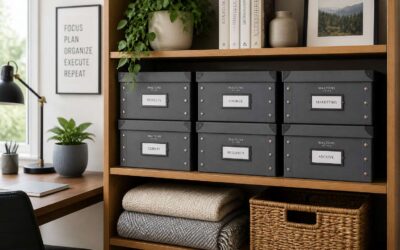
“The average South African spends nearly 2.5 days per year searching for misplaced items.” That statistic loses its shock value only when your Kallax unit becomes a black hole for household goods. Labels are the difference between a storage system and a storage guess. When you invest in storage boxes that fit kallax, you are buying the potential for order, but labels make that order retrievable.
The physical act of labelling forces a decision. You must define the contents before you even place the box on the shelf. This prevents the dreaded “miscellaneous” box that breeds chaos. A label transforms a generic container into a specific tool. It turns a passive receptacle into an active filing system for your home. The goal is to remove hesitation from the retrieval process entirely. You should never have to open a box to know what is inside.
A functional labelling strategy addresses the entire household. You do not need a label maker unless you want one. A simple sticker or a piece of masking tape with a permanent marker works effectively. The label should sit on the front face of the box, at eye level. This ensures visibility before you pull the container from the shelf. Consider the language of your household and label accordingly.
– Use a single format across all boxes, such as a colour code for each family member.
– Print labels for a uniform look, or handwrite them for a personal touch.
– Update labels immediately when the contents of a box change.
This practice adds a layer of intentionality to your shelving unit. When you label your storage boxes that fit kallax, you create a visual index. The unit becomes a catalogue of your possessions, not just a dumping ground. This small step saves time and reduces frustration during the morning rush or a busy workday. The label is the final piece that completes the storage puzzle, making the entire system user-friendly for everyone in the home.
Maximizing Vertical Space
Most South African homes leave the air above their furniture to gather dust. A Kallax unit typically ends at shoulder height, yet the vertical plane above it remains unexploited territory. Storage boxes that fit kallax change this dynamic when arranged with height in mind.
The top row should hold the lightest boxes, those containing items you retrieve on a seasonal rhythm. The lower rows handle heavier cargo. This distribution creates a visual hierarchy that makes the entire unit feel taller and more deliberate.
Three vertical patterns emerge in well-organised units:
- Tall boxes settle on the bottom row, anchoring the structure
- Short, wide boxes occupy the middle rows, breaking the grid
- A single low-profile box crowns the top row, drawing the eye upward
When storage boxes that fit kallax are distributed according to vertical logic, the unit serves more effectively without claiming additional floor space.
Seasonal Rotation Strategies
Seasonal rotation turns a Kallax from a static shelf into a living system. In South Africa, the weather shifts quickly, especially in the Cape. One month you need swimwear, the next you are digging for jerseys. Storage boxes that fit kallax make this swap painless when you assign each season its own row.
The rotation rhythm matters more than the boxes themselves. Follow a simple sequence:
- Label each box with a season.
- Store off-season items on the top row.
- Move in-season boxes to the middle and bottom rows.
This keeps the heavy items low and the current season visible. Because storage boxes that fit kallax come in uniform dimensions, you can slide the entire top row down without rejigging the structure. Three rotations a year keep every shelf relevant to the weather outside your window.
Kids’ Toys and Living Room Clutter
The living room in a South African home accumulates toys, remotes, chargers, and the odd stray sock. Storage boxes that fit kallax absorb this chaos without turning the space into a playpen. A row of lidded boxes at floor level contains building blocks and board games, while an open basket on the middle shelf handles the daily rotation of soft toys.
Children do not care about colour coordination. They care about speed. When clean-up time arrives, the system must work in seconds.
- One box per child prevents territorial disputes
- Waist height suits the youngest arms
- Top shelves store toys that need supervision
Living room clutter follows a different rhythm. Remote controls, cables, and sunglasses land in a single designated box near the seating area. Storage boxes that fit kallax keep these items visible but contained, so the room stays presentable even when life is not.
Home Office and Craft Supplies
An untidy craft shelf silently drains creativity. In South African homes, where space is often shared, the Kallax shelving unit provides a predictable grid. The real challenge lies in pairing it with storage boxes that fit kallax without sacrificing sight lines.
My office uses a three tier approach. The upper row holds reference files in transparent containers. The middle row contains active projects, each in its own tray. The lower row stores bulky supplies like glue guns and paper trimmers.
Enforce a rule for every box:
- Return it after each session.
- Use one box per craft type.
- Keep patterns folded, never rolled.
Storage boxes that fit kallax allow you to see the entire inventory at a glance. The result is a workspace that responds to urgency, not chaos.
Top Retailers and Budget-Friendly Finds
IKEA’s Own Storage Solutions
The Drona box remains the default choice for Kallax owners. IKEA’s own storage boxes that fit Kallax slide into the cube with a few millimetres of clearance, their rigid fibreboard walls holding shape where cheaper fabric cubes sag. The Kuggis range adds a lidded option, though its soft sides demand a careful hand when the shelf sits high.
For South African buyers, local retailers like @Home and Boardmans stock comparable inserts. Their fabric cubes often undercut IKEA’s price during seasonal sales, yet the fit varies. Measure the inner cube before committing.
- Check the cube depth before buying any third-party brand
- Look for reinforced base panels that prevent sagging
- Compare shipping costs, as online orders can double the price
IKEA’s own range of storage boxes that fit Kallax remains the benchmark. Disciplined shoppers watch the clearance section for discontinued colours, where a R50 saving on a daily-use box adds up across a wall unit.
Amazon Best Sellers
The permanent collection of objects demands a reliable container, and the hunt for storage boxes that fit kallax often leads past the familiar IKEA aisles into the wider retail wilderness. In South Africa, the search becomes a matter of patience, because the right dimensions rarely announce themselves with fanfare. Online marketplaces offer the broadest selection, though the photographs can deceive the eye.
Budget-friendly finds usually surface from independent sellers who measure their goods with more honesty. These traders understand that a cube is never truly square. Their products, often produced in smaller batches, display a consistency that mass-produced alternatives lack. The trick is to examine the stated depth, as some sellers trim a few millimeters to guarantee a fit.
For those willing to sift through the options, the best value emerges from a few unremarkable listings:
– Look for local sellers with high rating counts, as they handle returns without complaint
– Check the base material, since a cardboard bottom will bow under heavy books
– Read comments about the exterior texture, as some fabrics snag on the Kallax frame
A marketplace seller in Johannesburg once sent a batch of grey linen boxes that fit kallax with a precision I had not expected from a third-party source. The fibreboard bases held firm, and the handles were stitched with a care that rivaled the Swedish original. The price was half of the in-store option, a fact that made the wait for delivery worthwhile. The climate here calls for sturdy construction, and those boxes have survived the humid summers without warping.
Etsy and Handmade Options
The search for storage boxes that fit kallax often turns into a pilgrimage through South African retail landscapes. Major chains stock a limited range, and the coveted sizes vanish quickly. Local buyers find themselves comparing prices between large furniture outlets and niche online stores. The difference lies in the specifications, as many mainstream options are designed for international markets and ignore local humidity concerns. Patience is a currency here, and the dedicated shopper spends weekends trawling through stock lists.
Online marketplaces have become the primary hunting ground for these elusive containers. The range is vast, stretching from imported polypropylene to locally stitched fabrics. Large retailers do carry a respectable selection, but their focus remains on fast-moving furniture lines. For storage boxes that fit kallax, the specialty sellers offer a more reliable promise. Their listings often include detailed measurements and material breakdowns, which are essential for making an informed choice. Delivery times can stretch over a week, yet the accuracy of the product makes the wait bearable.
Etsy presents a fascinating alternative for the discerning eye. Handmade options from South African artisans carry a distinct character that mass-produced goods lack. These creators understand the exact fractions of a meter required for a seamless fit. They work with natural fibres and solid bases, producing storage boxes that fit kallax with a level of craftsmanship rarely seen in standard retail. The price point sits higher, but the durability and aesthetic appeal justify the expense. A handmade box becomes an investment in the room’s overall atmosphere.
Purchasing from these platforms requires careful consideration. Look for items that specify the depth clearly, as a millimeter can change everything.
– Verify the thickness of the side walls, as some are merely lined cardboard.
– Ask the seller about the stitching density on handles.
– Check if the base is a separate insert or permanently attached.
The independent makers usually respond with honesty and provide real photographs. A purchased box from a small studio in Cape Town might arrive wrapped in brown paper, holding a scent of fresh timber. That experience cannot be replicated by a warehouse in another province. The tradition of handmade goods persists because it offers a solution that fits both the shelf and the household’s character. Investing time in Etsy reveals a world where storage is not just functional, but personal.
Discount Stores and Dollar Stores
The hunt for storage boxes that fit kallax does not always demand a premium budget. Discount retailers and dollar stores have become unlikely contenders in this arena, offering solutions that challenge the assumption that price equates to quality. These establishments operate on volume, which means their stock rotates rapidly and their offerings change with the seasons. The shopper willing to visit regularly can uncover unexpected treasures among the shelves of kitchenware and generic household goods.
The key is understanding what these stores do well. They excel in basic fabric bins and simple plastic containers, items that serve their purpose without elaborate design flourishes. Many of these budget options are surprisingly sturdy, especially those intended for general home organisation. However, the fit is not guaranteed, so measuring remains essential before making a purchase.
When evaluating discount store finds, consider these qualities:
– The rigidity of the side walls, which determines whether the box holds its shape or sags.
– The material weight, as thicker fabrics resist tearing and wear.
– The presence of a solid base insert, a feature often missing in cheaper alternatives.
– The overall dimensions, which can vary slightly between production batches.
A storage box from a discount chain may lack the refined aesthetic of a handmade piece or the precise engineering of a major brand. Yet it answers a fundamental question of function. For those seeking storage boxes that fit kallax without straining their finances, these retailers offer a pragmatic starting point. The selection demands patience and a willingness to sift through uninspired designs, but the occasional find makes the effort worthwhile. A cheap box that fits perfectly outperforms an expensive one that does not.

0 Comments