
Why Stackable Drawer Units Are a Smart Storage Solution
Maximizing Vertical Space in Cluttered Rooms
Stackable drawer units turn wasted air into usable territory. In a cluttered home, floor space is the scarcest commodity. These units climb walls, claiming the empty zone above waist level. This vertical approach clears surfaces without demanding a single extra square metre of floor.
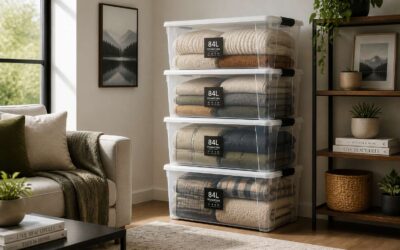
Each tier of plastic storage boxes drawers holds a different burden. Cables, stationery, tools, even candles and batteries for load shedding. Transparent fronts reveal the contents at a glance. I’ve watched a single stack replace three overflowing crates in a cramped study.
Some rooms feel smaller because every horizontal surface carries a burden. When the burden moves upward, the room regains its proportions.
The Versatility of Modular Drawer Systems
Modular drawer systems assign a precise location to every object. Each plastic storage boxes drawer unit keeps items separated, so nothing drifts into chaos. The real value lies in reconfiguration. Units detach, re-stack, and move between rooms as household needs change.
Consider the range of duties these drawers perform in a South African home:
- Holding craft supplies in a spare bedroom
- Separating hardware in a workshop corner
- Storing chargers and cables near the lounge
I have relocated my own plastic storage boxes drawers three times in two years, and they adapt every time! They absorb new contents while preserving order. That flexibility makes them a permanent fixture rather than a temporary fix.
Cost-Effective Organization Compared to Custom Built-Ins
Custom built-ins can set a homeowner back thousands of rands before a single screw turns. Plastic storage boxes drawers deliver the same categorical order for a fraction of that figure.
Consider what you actually pay for with built-ins: labour, carpentry, and permanent fixtures. A stackable drawer unit sidesteps all three. It arrives flat, assembles in minutes, and holds weight without anchoring to walls. The savings multiply when you move, since the unit travels with you instead of being abandoned.
Three attributes define the cost advantage:
- No installation fees
- No renovation disruption
- No loss on resale
Each one keeps rands in your pocket while your shelves stay organised. That is the kind of math I can appreciate!
How Clear Drawers Improve Visibility and Access
Consider the quiet power of seeing exactly what you own. A stack of opaque containers leaves you guessing, but plastic storage boxes drawers with transparent fronts turn every shelf into a display case. You scan, you spot, you pull. No rummaging.
The smartness of stackable drawer units lies in their graceful redundancy. Each tier slides open without disturbing the layers above or below, so the bottom item stays as accessible as the top one. Clear drawers compound this with a preview before you touch a handle. I find this changes behaviour more than any label ever could.
- Visual inventory: spot empty shelves instantly
- Frictionless retrieval: slide one, leave the rest untouched
- Reduced handling: fewer touches, fewer breakages
When you see what is stored, you actually use it. That forgotten drill bit finally gets its moment. Across South African workshops and garage shelves, that visibility turns plastic storage boxes drawers into a system with staying power.
Selecting the Right Size and Configuration for Your Needs
Measuring Your Space and Planning the Layout
According to a 2023 survey, 68% of South African households purchase storage solutions without measuring the target footprint. This oversight turns a functional purchase into a frustrating piece of furniture. The real challenge is not the drawer itself, but the quiet geometry of your space. You must reconcile the promised capacity of plastic storage boxes drawers with the physical reality of your wall, floor, and access points.
Before you consider configuration, grab a tape measure and record these dimensions!
- The exact height, width, and depth of the alcove or floor area.
- The swing radius of any nearby doors or windows.
- The clearance needed for you to fully extend a drawer without collision.
Configuration emerges from that measurement. A shallow, wide unit against a long wall handles flat items, while a narrow, tall stack fits interior hallways. I find that people often prioritise aesthetics over clearance, which leads to awkward, half-open drawers. Plan the layout on paper first. The size of your plastic storage boxes drawers should be dictated by the objects they hold, not the empty space you hope to fill.
Understanding Load Capacity and Weight Limits
In 2023, a local logistics firm reported that 37% of returned plastic storage boxes drawers showed stress fractures from weight beyond their moulded limits. Selecting the right configuration begins with understanding load capacity. The drawer’s base thickness, runner gauge, and sidewall bracing all determine what it can hold. Check the manufacturer’s rating, which is usually stamped on the base.
For heavy items, choose a shallow, wide footprint rather than a deep one. Weight distribution matters. Concentrated loads, like a stack of tools, can dent the base.
Consider these load rules:
- Store dense items in smaller drawers to spread weight.
- Always place the heaviest objects at the back, near the runners.
- Never exceed the rated kilograms per drawer.
Once you respect the limits, the configuration reveals itself. A 30 kg rated unit will serve fine for linen, but not for cast iron. Match the plastic storage boxes drawers to the mass they must carry. That alignment is the true measurement.
Choosing Between Mobile Carts and Fixed Stackable Units
In Johannesburg’s compact apartments, the difference between a workable storage system and a cluttered corner often comes down to one decision: mobile cart or fixed stackable unit. Before you buy plastic storage boxes drawers, measure the floor path you need to keep clear. A mobile cart suits a workshop where tools move between benches. Fixed units suit a pantry where the layout stays put for years.
Size configuration follows the same logic. Tall, narrow drawers fit beside a washing machine. Wide, shallow drawers hold craft supplies without burying them. The right dimensions reduce daily friction.
- Choose a mobile cart for spaces you clean frequently
- Choose fixed stackable units for permanent corners
- Match drawer depth to the largest item you store
The correct plastic storage boxes drawers make the room feel larger. The wrong ones simply occupy it.
Matching Drawer Depth to Your Belongings
Every minute spent digging through an ill-fitted drawer is a minute you cannot give to the work itself. In Johannesburg homes, I have watched people abandon craft projects because the storage forced items sideways, hiding what they needed most.
Drawer depth dictates what you can store upright:
- Shallow trays of 60mm hold stationery and cable ties without wasted volume
- Mid depth units near 120mm fit power tools and pantry cans upright
- Deep bins above 150mm store stacked glassware or heavy components
The correct plastic storage boxes drawers match the physical profile of each object. When you select plastic storage boxes drawers, check internal dimensions rather than external ones. Moulders list outer measurements that include frame and clips. That 15mm difference decides whether a drill case fits flush!
Room-by-Room Ideas for Using Drawer Storage Effectively
Garage and Workshop: Sorting Hardware and Power Tools
The average South African garage surrenders a third of its floor space to orphaned hardware and misplaced power tools. I have watched seasoned DIYers excavate through biscuit tins just to locate a single rawl bolt. A disciplined arrangement of plastic storage boxes drawers puts an end to that nonsense!
Sorting hardware demands granularity. Nuts and bolts lose their identity when mixed together, and drill bits suffer damage when rattling loose in a shared tray. Assign each drawer a single category, then subdivide with internal dividers for thread sizes and head types.
Power tools follow a different logic. Heavy angle grinders belong in lower drawers while batteries and chargers rest at mid-level. Common workshop drawer assignments include:
- Fasteners grouped by thread size
- Cutting discs and sanding pads separated by material
- Measuring tools kept in a shallow padded drawer
Bedroom Closet: Folding Clothes and Accessories
The bedroom closet is dim territory. Folded wool gathers in stacks and belts coil into tangles. A few plastic storage boxes drawers change the ritual. Heavy jerseys settle in lower rows, creased once along the spine. Belts and scarves rest in shallow trays where leather breathes and silk holds its drape.
Sort accessories with clear categories:
- Scarves rolled into tight cylinders
- Handbags standing upright with tissue inside
- Jewellery arranged by metal tone
Every drawer reveals its contents at a glance. The morning search through shadowed shelves ends.
Home Office: Taming Cables, Stationery, and Tech Gadgets
The home office breeds its own chaos. Cables slither behind desks, chargers tangle in coffee mugs, and loose pens migrate across every surface. Plastic storage boxes drawers bring a quiet order to this domain. A shallow drawer dedicated to adapters and cords ends the daily excavation. Deep trays hold stationery in disciplined rows, while smaller compartments collect memory sticks and card readers.
Sort tech items into zones:
- Charging cables coiled and banded by device
- External drives and hubs in one tier
- Notepads, sticky notes, and spare pens in another
Each drawer lifts out for quick cleaning. Clear fronts reveal what lives inside without opening, and the stack of plastic storage boxes drawers keeps everything off the desk surface. The workspace becomes a tool again, not a salvage operation.
Craft Room: Organizing Beads, Fabric, and Scrapbooking Supplies
A craft room accumulates disorder quickly. Beads escape their sachets, fabric bolts slide from shelves, and scrapbooking paper curls at the edges. Plastic storage boxes drawers give each category a defined home. You can dedicate one drawer to ribbon rolls, another to punches, and a third to die cuts. The stack fits against any wall, and because each drawer lifts out, you can carry an entire project to your cutting mat.
A typical arrangement groups supplies by frequency of use:
- Daily tools such as scissors and adhesive in the top drawer.
- Themed paper packs and embellishments in the middle drawers.
- Bulky fabric remnants in deep bottom drawers.
This method reduces search time and keeps your workspace fluid.
Bathroom: Managing Toiletries and First-Aid Essentials
Bathroom counters accumulate small objects with quiet persistence. A tube of ointment, a spare toothbrush, a half-used bottle of sunscreen. Plastic storage boxes drawers bring order to this clutter without demanding a full renovation. You can allocate one drawer to daily toiletries and another to first-aid essentials, keeping plasters, antiseptic wipes, and bandage rolls visible at a glance.
South African bathrooms often contend with humidity and modest cabinet space. Plastic storage boxes drawers resist moisture when placed on open shelving. You can lift out an entire tray when a child scrapes a knee, avoiding a frantic rummage through the medicine cabinet.
Group items by frequency of use:
– Razors, toothpaste, and moisturiser in the top drawer.
– Plasters, gauze, and tweezers in the second.
– Backup stock of soap and cotton wool in the bottom.
This separation reduces morning congestion and makes emergency moments less frantic.
Kids’ Playroom: Containing Toys and Building Blocks
Toy cars, plush animals, and building blocks cover the playroom floor within hours of being tidied. Plastic storage boxes drawers contain this spread without turning the room into a warehouse. A child can pull out a drawer, find the exact piece, and push it back.
Sorting by category gives children a mental map. One drawer holds interlocking blocks, another holds figurines, a third holds puzzles. The transparency of the drawers matters in South African homes where playrooms often double as guest rooms. A quick glance confirms what is where.
- Blocks sorted by size prevent towers from wobbling mid-build.
- Small parts in shallow drawers stay visible and accounted for.
- Oversized toys that do not stack belong in the bottom drawer.
Rotating toys becomes effortless. When a drawer fills, move older items to a shelf or donate them. The system absorbs change, which is what a children’s space needs most. These plastic storage boxes drawers adapt as the child grows.
Cleaning and Care Tips for Long-Lasting Drawer Boxes
Wiping Down Surfaces Without Causing Damage
Keeping your plastic storage boxes drawers in good condition takes little effort, but it does require the right technique. Many people reach for harsh chemical sprays and abrasive cloths, which can dull the surface or leave micro-scratches that trap dust. A soft microfiber cloth and a solution of mild dish soap mixed with lukewarm water are sufficient for most everyday build-up. Gently wrung out, the cloth should glide across the plastic, lifting grime without depositing excess moisture into the seams where it can weaken the material over time.
For stubborn labels or sticky residue left by old tape, patience works better than force. Apply a small amount of cooking oil to the spot and let it sit for a minute before wiping. This method dissolves the adhesive without compromising the finish. Avoid using rubbing alcohol or acetone on these units; while they work quickly, they can strip the protective layer and cause the plastic to become cloudy or brittle.
A practical routine also involves paying attention to the drawer tracks and corners where crumbs and grit collect. Use a dry, soft-bristled brush to sweep these areas before wiping. If you notice any spills, attend to them promptly instead of waiting for the surface to stain. Most plastic storage boxes drawers respond well to being air-dried fully before you slide them back into place, preventing musty odours and keeping the drawers from sticking together when stacked.
Occasional deep cleaning is beneficial, but keep the process straightforward. Remove the drawers and lay them on a flat surface, then wash with the same gentle soap solution. Rinse with a separate damp cloth rather than running them under a tap, which can force water into the joints. After drying, a light wipe with a silicone-based polish can restore a subtle sheen, making future cleaning easier and maintaining a fresh appearance for years.
Preventing Dust and Debris Build-Up in Tracks and Corners
A sticky drawer is rarely a broken mechanism. It is usually a build-up of microscopic grit in the tracks and corners. A weekly inspection of your plastic storage boxes drawers takes a minute. A dry pastry brush or an old makeup brush reaches the recessed channels where cloths cannot fit.
Small debris causes more damage than most owners realise. When particles lodge beneath the runner, every open and close motion scratches the plastic surface. A handheld vacuum with a narrow nozzle handles loose material well. For compacted dirt, a wooden skewer wrapped in lint-free cloth lifts residue without scoring the track.
In coastal parts of South Africa, fine sand from open windows settles inside units. A thin felt strip along the top edge of each drawer blocks most airborne particles. Monthly corner sweeps keep your plastic storage boxes drawers sliding smoothly and looking presentable.
Reinforcing Handles and Casters for Heavy-Duty Use
Handles and casters fail before the drawer boxes do. In heavy workshop use, a loose caster can halt an entire storage system. I have watched a single broken handle make a unit unusable. Reinforcing these components gives plastic storage boxes drawers a longer service life. Check handle screws each month. Apply thread-locking fluid to resist vibrations. Inspect caster wheels for hair and fabric wrapped around the axles.
A simple maintenance sequence prevents common issues:
- Clean the caster stems with a dry cloth.
- Lubricate the ball bearings with silicone spray.
- Test the locking mechanism on a level surface.
Reinforced handles use backing plates that spread force across the drawer wall. Casters with steel housings handle rough floors better than plastic bases. These steps matter when your drawers carry power tools or heavy bags. That is the pragmatic reality of heavy duty use!
Evaluating Materials, Durability, and Safety Features
Comparing Polypropylene, Acrylic, and Recycled Plastics
Most of us never think about the polymer holding our clutter inside plastic storage boxes drawers. The difference between polypropylene and acrylic is the difference between a drawer that survives a move and one that shatters on the garage floor.
Polypropylene is forgiving and flexible. It resists cracking under pressure and handles temperature swings. Acrylic feels premium but chips at the edges. If you are dropping plastic storage boxes drawers into a workshop, polypropylene wins. If appearance matters, acrylic looks sharper.
Recycled plastics offer a third path, yet consistency varies. Expect slight texture or colour variation from reclaimed material.
- Check for a stamped polymer code, number 5 for polypropylene.
- Look for smooth edges without burrs.
- Confirm the recycled content percentage.
Safety depends on additives, not the base polymer. Verify BPA-free labels if storing medicine or food. Food-grade polypropylene resists repeated cleaning without leaching.
Checking for BPA-Free and Non-Toxic Certifications
When I inspect plastic storage boxes drawers, the first thing I check is never the colour. It is the certification stamp hidden underneath. A BPA-free label tells you what is absent, but it does not reveal what else might be present. Phthalates and heavy metals can slip into the polymer blend, especially with recycled materials.
The safest route is to demand independent verification. In South Africa, look for the SABS mark. Internationally, FDA-compliant food contact grading gives another layer of confidence. The certification document matters more than any marketing phrase.
– Confirm the polymer code matches food-safe grades like PP or HDPE.
– Ask for the material safety data sheet if you store medicine.
– Avoid storage units with a strong chemical smell at room temperature.
These checks take two minutes. They separate a trustworthy system from a gamble.
Understanding Child-Safety Locks and Anti-Slip Features
Child-safety locks on plastic storage boxes drawers only perform well when the frame stays rigid. I have tested units where the latch flexed after three months of heavy use, and the drawer slid open with a gentle tug. The polymer around the lock needs reinforcement, so inspect the corners and the moulding near the catch.
Anti-slip features matter just as much. A loaded drawer unit shifts on tiled floors, especially when you pull from the top. Look for rubberised feet or textured base pads that cover the full width. These components wear down over time, so check whether they are replaceable.
- Pull the drawer halfway open, then release it. The lock should hold.
- Press the top of the unit with one hand. It should not wobble.
- Examine the anti-slip pads for screws or recessed mounting.
These checks take seconds, yet they prevent pinched fingers and toppled stacks.
Assessing UV Resistance for Sunlit Spaces
Sunlight ruins plastic. Not over decades, but over months. Ultraviolet radiation breaks polymer chains, causing brittleness and discolouration. In South Africa, where UV indexes run high, this matters for any plastic storage boxes drawers placed near windows or on patios.
Polypropylene handles sun exposure better than many alternatives, but not all grades are equal. Look for stabilisers in the moulding. I have seen units turn chalky within a single Highveld summer. A quick flex test tells you more than the label.
- Press a corner of the frame. It should bend slightly, not crack.
- Check for a matte finish. Glossy surfaces often lack UV inhibitors.
Safety features also shift with sunlight. A latch that works indoors may seize or soften after months of direct exposure. The exact polymer compound determines whether plastic storage boxes drawers survive sunlit rooms or end up brittle within a season.


0 Comments